


81% of consumers need to trust a brand before they buy. That trust rarely comes from ads or self promotion.
Digital PR shapes how your brand shows up online before someone ever visits your site. It builds credibility through media coverage, third-party mentions, and visibility in search results. If your brand needs trust to grow, digital PR plays a central role.
Quick Summary:
- Digital PR builds trust by earning coverage on credible websites
- It supports SEO through high-quality backlinks and brand mentions
- It shapes search results, not just press attention
- Strong digital PR improves visibility, credibility, and long-term growth
Contents:
- What is Digital PR
- Digital PR vs Traditional PR
- Benefits of Digital PR
- Strategies & Tactics
- How to Create a Digital PR Campaign
- Metrics to Track
- Conclusion
- FAQs
What is Digital PR?
Digital PR (or online public relations) builds a brand’s visibility and reputation by earning media coverage, high-quality backlinks, and credible mentions across the web. It combines traditional PR storytelling with SEO and content strategy to shape what appears in search results, build trust, and strengthen online authority.
Digital PR vs Traditional PR
Both approaches focus on reputation and visibility, but they work in different ways.
Traditional PR centers on exposure and awareness, often without clear insight into what that exposure produces. Results are inferred. You can’t know exactly how many people listen to a radio ad or see a billboard, or easily tie those numbers to your return on investment.
Digital PR is built for the way people discover brands today. It connects coverage to outcomes you can measure and refine over time. Instead of one-off exposure, it creates ongoing signals that support visibility, credibility, and growth. The result is a clearer picture of what is working and why, with less guesswork and more control.
| Feature | Traditional PR | Digital PR |
| Channels | Print media, TV, radio, physical events | Online publications, blogs, social media, podcasts |
| Reach | Local or national (broadcast/print circulation) | Global, targeted online communities |
| Longevity | Fleeting (one-time feature, ad placement) | Evergreen (content lives online, drives traffic continually) |
| Measurement | Estimates (circulation, viewership) | Data-driven (backlinks, traffic, conversions, engagement) |
| Cost | Often higher distribution costs | Lower information distribution costs |
| Primary Goal | Brand awareness, reputation management | SEO, website traffic, lead generation, brand authority, reputation management |
3 Benefits of a Digital PR Strategy
Boost Your SEO and Search Rankings
Digital PR supports SEO by earning high-quality backlinks that improve visibility and search rankings. When trusted news outlets or niche blogs link to your site, search engines treat it as a signal of credibility and relevance.
These links act as endorsements, which strengthen your authority the more endorsements you earn.
A strong digital PR strategy combines media pitching, SEO-focused guest content, thought leadership, and data-led stories to earn editorial links. These links carry more weight than paid placements because they are earned, not bought.
The result is lasting SEO value and stronger brand credibility. When PR and SEO work together, growth builds naturally.
Build Brand Authority and Trust
People trust independent sources more than brand messaging. Reviews, media mentions, and third-party coverage build credibility in ways ads cannot.
Digital PR positions your brand as a trusted voice by placing your experts in interviews, articles, and industry publications. Consistent quotes and bylines signal expertise to both readers and search engines, strengthening the trust signals Google looks for in their EEAT SEO guidelines.
Trust drives decisions. When your brand shows up across news sites, search results, podcasts, and social platforms, familiarity grows. That steady visibility builds confidence and supports a stronger brand reputation over time.
Drive Website Traffic and Generate Leads
Digital PR drives traffic by earning links that improve search visibility and rankings. Higher rankings lead to more clicks, and those clicks often come from trusted sites that have already validated your brand.
Consistent media coverage also builds recognition before someone searches for you. When your name feels familiar, people are more likely to choose your listing. That recognition lifts click-through rates and site visits.
The result is better traffic, not just more traffic. Visitors arrive with intent and trust, which increases the chances of leads and conversions.
Digital PR Tactics & Strategies
A successful digital PR strategy requires creating newsworthy content, pitching it to the media, and engaging with your online community.
Create & Distribute Content
Content is the foundation of digital PR. To attract media attention and earn backlinks, you need to create newsworthy content that offers your audience value.
Here are some key content types for your digital PR campaign:
- Data Storytelling & Original Research: Data-driven research studies or analyses of existing public data that uncover unique insights is perfect for digital PR. This type of content is highly shareable and attractive to journalists because it provides them with original data for stories.
- Press Releases: Press release distribution is a powerful digital PR tool. When written with SEO in mind, it can announce new products, services, or company milestones, attracting media attention and improving search engine performance.
- Guest Posts & Thought Leadership: Writing guest posts for industry blogs or getting subject matter experts featured in interviews helps position your company as a thought leader. These opportunities earn high-quality backlinks and build credibility.
- Interactive Content: Infographics, quizzes, and interactive tools can present complex data in an engaging and easily digestible format, making them highly shareable and more likely to be picked up by media outlets.
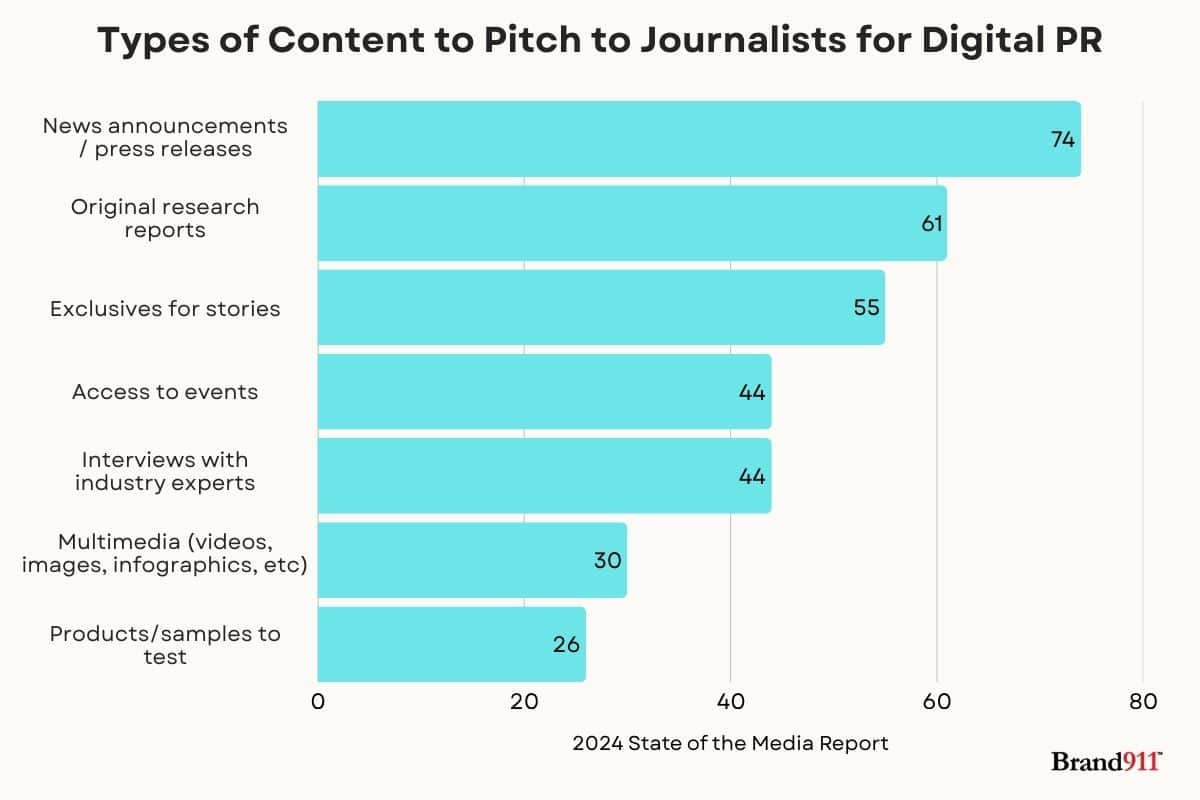
If you’re pitching to journalists, they prefer three main types of content, according to the 2024 State of the Media Report: News announcements & press releases, original research reports, and exclusives for stories. Whatever you do, make it original and unique.
Build Relationships Through Strategic Outreach
Creating great content is the first step. The next step is getting it seen. Strategic outreach is about connecting with the right people at the right time.
- Media Pitching: Identify relevant journalists, bloggers, and online publications whose audience would be interested in your story. Pitches should be concise and highlight a mutual benefit. Make it easy for journalists to know why your story matters.
- Journalist Outreach: Building genuine relationships with journalists is important. Services like Qwoted are full of journalists looking for experts’ viewpoints.
- Influencer Marketing: Partnering with influencers, niche experts, or industry bloggers can introduce your brand to new markets. To build trust with their audience, find influencers whose values align with yours and focus on authentic storytelling.
- Newsjacking: This tactic involves inserting your brand or message into a trending topic or breaking news story. For example, if there is a major industry announcement, we can quickly provide expert commentary or data-driven insights to relevant reporters, positioning your brand as an authority. This requires speed and precision.
Leverage Social Media & User-Generated Content
Social media plays a large supporting role in digital PR because it amplifies earned media, engages your community, and helps to gather social proof.
- Social Proof: User reviews, testimonials, online forums, and social media posts and comments are effective digital PR tools. Encouraging customers to share their experiences with your products or services generates authentic content that people trust more than advertisements or promotion.
- Community Engagement: Social platforms allow for direct interaction with your audience. Humanize your brand by joining conversations, responding to comments, and sharing user-generated content. This shapes public perception and builds loyalty.
- Amplifying Coverage: When your brand gets featured in an online publication, social media is a direct way to share that coverage, extend its reach and demonstrate your credibility to a wider audience. This helps increase the impact of every earned media placement.
How to Create an Effective Digital PR Campaign
A strong digital PR campaign requires clarity, a focused message, and a way to measure results as you go.
- Set Clear Goals: Decide what success means before you start. Do you want more backlinks, higher rankings, brand visibility, or qualified traffic? Pick specific outcomes so every action supports the same objective.
- Define Your Audience: Know who you are trying to reach and where they spend time online. This shapes the angle of your content and determines which publications and journalists matter.
- Create Newsworthy Ideas: Focus on stories that give people a reason to care. Original data, timely insights, or clear expert perspectives work best. If the idea does not help a reader or reporter, it will not land.
- Build Shareable Assets: Turn ideas into clear, usable content. Reports, visuals, short explainers, and interactive pieces make coverage easier and more likely. Repurposing content can give you more mileage per idea.
- Pitch With Purpose: Keep pitches focused and direct. Highlight why the story matters now and why it fits that audience. Make it easy for someone to cover your story without extra work.
- Track and Refine: Measure what happens after coverage goes live. Watch backlinks, referral traffic, brand mentions, and conversions. Use this data to improve your next campaign instead of guessing.
What Digital PR Metrics to Track
One of the key advantages of digital PR over traditional PR is the ability to measure outcomes. Here are the key metrics to monitor:
- Backlinks: Measure how many links you earn and where they come from. Links from trusted, relevant sites carry more weight and support stronger rankings.
- Domain Authority or Domain Ranking: Watch changes in site authority over time. Growth here signals that your backlink profile is getting stronger.
- Referral Traffic: Check how many visitors arrive from media coverage and earned placements. This shows which mentions actually send people to your site.
- Brand Mentions: Track how often your brand is referenced online, even without links. These signals reinforce visibility and credibility.
- Share of Voice: Compare how often your brand appears against competitors. This helps you understand your presence within your space.
- Conversions and Lead Generation: Tie coverage to actions like sign-ups, inquiries, or sales. This shows which PR efforts drive real business results.
Conclusion
Digital PR helps brands build trust, visibility, and authority where decisions are made.
When your brand earns coverage on credible sites, those signals shape search results, influence perception, and support long-term growth. Digital PR connects storytelling with measurable outcomes, giving you more control over how your brand appears online.
Key takeaways
- Digital PR builds trust through third-party coverage and earned visibility
- It supports SEO with high-quality backlinks and brand mentions
- Strong digital PR improves search presence, not just press exposure
- Results compound over time instead of disappearing after a campaign ends
If you want to shape your online presence with credibility and intent, digital PR is a core strategy. Learn more about our Online PR services and how we help brands earn visibility that lasts.
Frequently Asked Questions (FAQs) About Digital PR
How does digital PR help small businesses?
Digital PR helps small businesses build trust and visibility without relying on large ad budgets. By earning coverage on relevant blogs, niche publications, and local media, you can strengthen authority, support SEO, and attract qualified traffic that leads to growth.
What tools are used for digital PR?
Common tools include media databases for outreach, SEO platforms to track backlinks and authority, and analytics tools to measure traffic and conversions. These tools help you manage pitches, monitor mentions, and understand what coverage drives results.
What is the difference between digital PR and content marketing?
Content marketing focuses on content you publish on your own platforms. Digital PR focuses on getting that content featured on third-party sites. One builds owned assets. The other earns external credibility and visibility.
Is digital PR the same as link building?
No. Link building focuses on acquiring links. Digital PR earns links as a result of real coverage, stories, and expert mentions. The links come from credibility, not tactics alone.
How long does digital PR take to show results?
Some coverage can drive traffic quickly, but most digital PR results build over time. Authority, rankings, and trust compound as coverage and mentions accumulate.
Can digital PR support SEO without paid ads?
Yes. Digital PR strengthens SEO through earned backlinks, brand mentions, and visibility. These signals support rankings without relying on ongoing ad spend.
What types of content work best for digital PR?
Original research, expert insights, timely commentary, and clear data stories perform best. Journalists and publishers look for content that adds value to their audience.
How do you measure digital PR success?
Success is measured through backlinks, referral traffic, brand mentions, share of voice, and conversions. These metrics show both visibility and business impact.
Is digital PR worth it for long-term growth?
Yes. Digital PR builds authority that compounds over time. Unlike short-term campaigns, earned coverage continues supporting visibility, trust, and search performance long after it’s published.
About us and this blog
We are a digital marketing company with a focus on helping our customers achieve great results across several key areas.
Request a free quote
We offer professional SEO services that help websites increase their organic search score drastically in order to compete for the highest rankings even when it comes to highly competitive keywords.
Subscribe to our newsletter!
More from our blog
See all posts





Recent Posts
- What is an SEO Strategy? January 8, 2026
- What Is Digital PR? A Practical Guide to Building Trust Online January 6, 2026
- How to Do a Content Gap Analysis December 30, 2025


Recent Comments