


How to Distribute a Press Release (Without Wasting Time or Money)
- December 23, 2025
- Online PR
Can you guess where most press releases end up?
That’s right, in the virtual garbage.
With more than 1 in 4 journalists seeing over 100 press releases each week, it’s no surprise that most are ignored. So, what do you do when you have an announcement to make?
The real difference between widespread coverage and falling on deaf ears is knowing how to distribute a press release.
Quick Summary: How to Distribute a Press Release
Press release distribution is the process of getting your press release in front of journalists and media outlets that are positioned to cover it. It’s not just about sending a release out. It’s about placing it where it has the best chance to be seen, used, and shared.
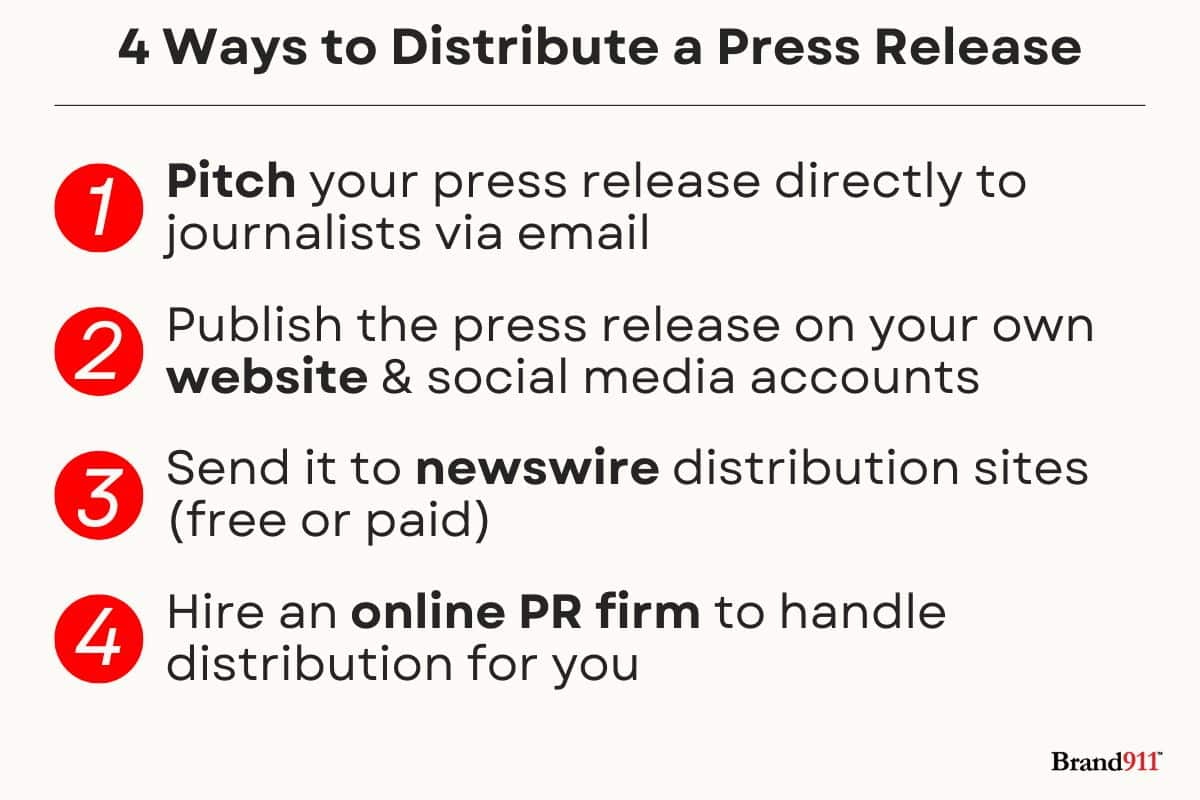
There are 4 ways to distribute a press release:
- Direct pitching to journalists and media outlets
- Publishing the press release on your own website and socials
- Submitting the press release to press release distribution websites
- Hiring an online PR firm to handle it for you
Before You Distribute: Is This Actually News?
Not every announcement deserves a press release.
Press releases are meant for news, not routine updates or internal milestones. If the story doesn’t matter to someone outside your company, even the best distribution strategy won’t fix that.
A newsworthy press release usually has at least one of these elements:
- Timeliness: It connects to something happening now. A trend, an industry shift, a recent event, or new data.
- Relevance: It affects a specific audience or industry. Journalists care about how the story impacts their readers, not what it means for your marketing calendar.
- New information: There’s something genuinely new. A launch, a change, a first, or a clear development.
- Clear context: The story fits into a bigger picture. It explains why this matters now, not just what happened.
If your announcement sounds like a promotion, a blog post, or an internal update, it’s probably not ready for distribution yet.
Getting this part right matters. A strong distribution strategy can’t save a weak story, but a solid news angle gives your press release a real chance to earn attention.
Once you’re confident you have something worth sharing, then it’s time to think about where it should go and who should see it.
4 Ways to Distribute a Press Release
There isn’t one “best” way to distribute a press release. The right approach depends on your goals, your audience, your budget, and how much control you want over the outcome.
Here are the four most common options, and when each one makes sense.
Direct Pitching to Journalists
Direct pitching is the most reliable way to earn coverage that builds credibility.
This approach focuses on emailing a small, targeted list of journalists who already cover your topic. Relevance matters more than volume. The most common reason pitches are rejected is simple: the story doesn’t fit the journalist’s beat.
What makes direct pitching work:
- A researched media list, not a mass blast
- Personalized outreach that shows you understand the journalist’s audience
- A clear explanation of why the story matters no
Email is still the preferred channel for outreach, but journalists receive hundreds of pitches each week. Generic messages get ignored. Relevance and timing are what separate responses from silence.
Direct pitching also supports long-term visibility. When journalists recognize your name and trust your relevance, future announcements are easier to place.
Publishing on Your Own Website
Your website is part of your distribution strategy, not an afterthought.
Publishing your press release on your site:
- Gives journalists a source to reference and link to
- Extends the lifespan of your announcement
- Supports search visibility and brand authority
This is often referred to as owned media, and it’s one of the few channels you fully control. While it won’t generate coverage on its own, it strengthens every other distribution effort, especially direct pitching and social sharing.
Your press release should live somewhere accessible, clear, and easy to reference.
Newswire Distribution Websites
Newswire services push your press release to a large number of websites at once.
Why businesses use them:
- Fast, broad distribution
- Increased online visibility
- Required disclosures for certain organizations
What to understand before using them:
- Costs vary from $100 for local reach to thousands for national or global distribution per release
- You’re paying for placement, not editorial interest
- Syndication does not guarantee earned media coverage
Newswire distribution makes sense for major announcements that require scale, speed, or compliance. It’s less effective when used as a default strategy for every update.
Hiring an Online PR Firm
An online PR firm handles distribution strategically, not just mechanically.
This typically includes:
- Evaluating whether the story is newsworthy
- Choosing the right mix of distribution channels
- Pitching journalists directly
- Tracking coverage and outcomes
This option is useful when:
- You want a clear strategy instead of trial and error
- You don’t have time to manage outreach
- Visibility, trust, and reputation matter more than raw impressions
A good PR partner helps you avoid wasted spend on broad distribution and focuses on placing your announcement where it actually counts.
Each method plays a different role. The key is choosing the right mix based on your announcement instead of relying on a single channel to do all the work.
How to Pitch a Press Release For Maximum Coverage (Email Best Practices)
A short, personalized, and relevant email pitch gives you the best chance to earn a journalist’s attention.
Your pitch email is your one shot to connect with a journalist. Here’s how to do it right:
Write a Compelling Subject Line
Your subject line should make the journalist want to open your email. Keep it short (under 10 words) and specific. If you have an exclusive, say so in the subject line.
A generic subject like “Press Release” gets deleted, while “New Data: 82% of Businesses Struggle With Online Reviews” Gets Opened.
Keep the Email Under 200 Words
65% of journalists prefer pitches under 200 words. (They’re busy). Lead with why the story matters to their readers. Explain the news in a few sentences and let them know the full release is below. Respect their time.
Paste the Press Release in the Email Body
Never use attachments. They get caught in spam filters and require extra clicks. Paste the full press release into the email body–below your pitch. This allows a journalist to scan it quickly and decide if it fits their coverage.
Send Early in the Week
Timing is critical. 57% of journalists prefer to be pitched on a Monday, and 20% on a Tuesday. 68% say the best time to pitch is before noon. Avoid Fridays, as no one wants a new assignment before the weekend.
Press Release Pitch Email Template
Subject line:
[Clear, specific angle — not “Press Release”]
Example: New data on [industry issue] impacting [audience]
Hi [Journalist’s name],
I’m reaching out because you recently covered [specific article or topic they’ve written about], and this announcement aligns with that beat.
We’ve just released [one-sentence summary of the news]. The key takeaway is [why it matters to their audience right now].
This may be relevant for your readers because [short, audience-focused reason].
I’ve included the full press release below for context. Happy to provide additional details, data, or a quick comment if helpful.
Best,
[Your full name]
[Title / role]
[Company name]
[Phone number]
[Website]
[Copy & Paste Full Press Release Here]
When and How to Follow Up
Following up can be necessary. But, do it correctly to avoid annoying or scaring off the journalist.
MuckRack’s State of Journalism 2024 report found that 51% of journalists say one follow-up is ideal and 48% say it should come within 3-7 days later. This gives journalists time to consider your pitch.
Keep your follow-up brief and polite. You can offer a new angle or a timely hook. Journalist Nichole Talbot notes that timely and relevant follow-ups can lead to booked stories.
Stop after two attempts if you get no response. Pushing further will only damage the relationship and hurt your chances in the future.
How to Make Press Release Distribution Part of a Bigger Strategy
Press release distribution works best when it supports something larger than a single announcement.
A press release isn’t a standalone tactic. It’s one piece of a broader online PR and visibility strategy that combines earned attention, owned assets, and consistent messaging.
Think in Channels, Not One-Off Sends
Effective distribution connects four areas:
- Earned media: Coverage from journalists who decide your story is worth sharing. This is where credibility comes from.
- Owned media: Your website, blog, and newsroom. This is where your press releases live long-term and support search visibility.
- Shared media: Your social channels, where announcements and coverage are amplified and reinforced.
- Paid media: Used selectively to extend reach or meet disclosure requirements, not as a substitute for relevance.
The goal is to make these channels support each other. Coverage points back to your site. Your site reinforces authority. Social sharing extends the lifespan of both.
Repurpose Press Releases With Intent
A press release shouldn’t disappear after it’s sent.
Strong announcements can be repurposed into:
- Blog posts that add context or explain the impact
- Social posts that highlight key points or coverage
- Email updates for customers, partners, or stakeholder
This extends the value of the announcement and reaches audiences who may never see the original release. For a deeper breakdown, see our guide on how to repurpose content.
Amplify Earned Coverage
When you earn media coverage, treat it as proof, not a one-time win.
Ways to extend its impact:
- Share articles on social channels
- Feature coverage on your website
- Reference it in email updates or newsletters
This reinforces credibility and makes future announcements easier to place.
Use an Online Newsroom as Your Hub
An online newsroom gives journalists a clear place to find what they need.
It should include:
- Press releases
- Media contact information
- Brand assets and images
- Background information about your organization
This reduces friction for journalists and supports consistency across coverage, search, and reputation-building efforts.
When press release distribution is part of a system, each announcement builds on the last. Over time, that consistency compounds visibility, trust, and authority.
Conclusion: Distribution Is What Makes a Press Release Work
Press releases don’t fail because they’re written poorly. They fail because they’re sent without a plan.
Knowing how to distribute a press release means understanding where it belongs, who should see it, and how it supports visibility beyond a single announcement. When distribution is intentional, press releases can earn coverage, support search rankings, and strengthen credibility over time.
Key takeaways to remember:
- Press release distribution is about relevance and placement, not volume
- Direct pitching is the most reliable way to earn real media coverage
- Publishing releases on your own website supports long-term search visibility
- Newswire distribution has a role, but it’s not a guarantee of coverage
- Press releases work best when they’re part of a broader online PR strategy
If you’re sending press releases and seeing little traction, the issue usually isn’t effort. It’s focus.
At Brand911, our online PR services are built around writing and distributing press releases designed to earn attention and rank in search results. We focus on strategic placement, search visibility, and credibility.
Frequently Asked Questions (FAQs) About Press Release Distribution
What is the best way to distribute a press release?
The most effective way to distribute a press release is through targeted email pitching to journalists who already cover your industry or topic. This approach focuses on relevance instead of volume. A short, personalized email explaining why the story matters to the journalist’s audience significantly increases the chance of coverage. The full press release should be pasted into the email body, not sent as an attachment, so it can be reviewed quickly.
How much does it cost to distribute a press release?
The cost of press release distribution depends on the method used. Direct email pitching is free, aside from the time spent researching journalists and writing personalized pitches. Newswire distribution services typically cost several hundred to several thousand dollars per release, depending on geographic reach and add-ons. Paid distribution increases visibility but does not guarantee media coverage.
What is the difference between a press release and a pitch?
A press release is the full announcement, including the headline, body copy, quotes, and contact information. A pitch is a short, personalized email sent to a journalist that explains why the press release is relevant to their audience. The pitch is meant to secure interest, while the press release provides the details needed to write a story. Sending a press release without a pitch is rarely effective.
Can you distribute a press release for free?
Yes, a press release can be distributed for free by emailing journalists directly and publishing it on your own website. This method requires research and personalization but often produces better results than paid distribution. Free distribution focuses on relevance and relationships rather than broad syndication.
Do press releases help with SEO?
Press releases can support SEO when they are published on your own website and earn backlinks from credible media outlets. While syndicated releases alone do not improve rankings, earned coverage and links from trusted sources can increase search visibility and authority over time.
When is the best time to send a press release?
The best time to send a press release is typically early in the week, during the morning hours. Journalists often plan coverage on Mondays and Tuesdays, and emails sent before midday are more likely to be reviewed. Fridays and late afternoons tend to perform poorly.
Should you use a newswire service to distribute a press release?
Newswire services are useful for announcements that require broad visibility, speed, or regulatory disclosure, such as major launches or financial updates. However, they do not guarantee earned media coverage. For most announcements, targeted journalist outreach is more effective than relying solely on newswire distribution.
About us and this blog
We are a digital marketing company with a focus on helping our customers achieve great results across several key areas.
Request a free quote
We offer professional SEO services that help websites increase their organic search score drastically in order to compete for the highest rankings even when it comes to highly competitive keywords.
Subscribe to our newsletter!
More from our blog
See all posts





Recent Posts
- What is an SEO Strategy? January 8, 2026
- What Is Digital PR? A Practical Guide to Building Trust Online January 6, 2026
- How to Do a Content Gap Analysis December 30, 2025


Recent Comments