


15 Personal Branding Mistakes That Hold You Back (And How to Fix Them)
- December 9, 2025
- Personal Branding

Building a personal brand sounds straightforward. You show up online, share what you know, and hope the right people notice.
…until you get into the weeds of it, and it can get overwhelming fast. The truth is, most people make the same personal branding mistakes over and over again. These mistakes slow your growth, confuse your audience, and make your brand harder to remember.
Thankfully, you can fix all of them. And once you do, your brand becomes clear, consistent, and aligned with where you want to go.
Let’s walk through the most common personal branding mistakes so you can avoid them.
1. Starting From a Weak Foundation
Many personal branding mistakes start here. You begin posting before knowing who you want to reach or what you want to say.
A weak foundation shows up as:
- No goals
- No clear audience
- No unique value
- A strategy that changes every week
If you don’t know what you want, your audience won’t know either.
A strong brand starts with three simple questions:
- What do you want?
- Who do you help?
- How do you help them?
Set the foundation first. Everything gets easier after that.
If you need help clarifying your message, this guide on how to write a personal brand statement can give you a clear starting point.
Defining your UVP
Your UVP explains what makes you the right choice in a crowded space. It’s the difference between blending in and standing out.
To define it, look at three things: what you do well, what your audience needs, and what only you can offer. Pay attention to your strengths, your process, and the results you create. When you can explain your value in one clear sentence, your brand becomes easier for people to understand and remember.
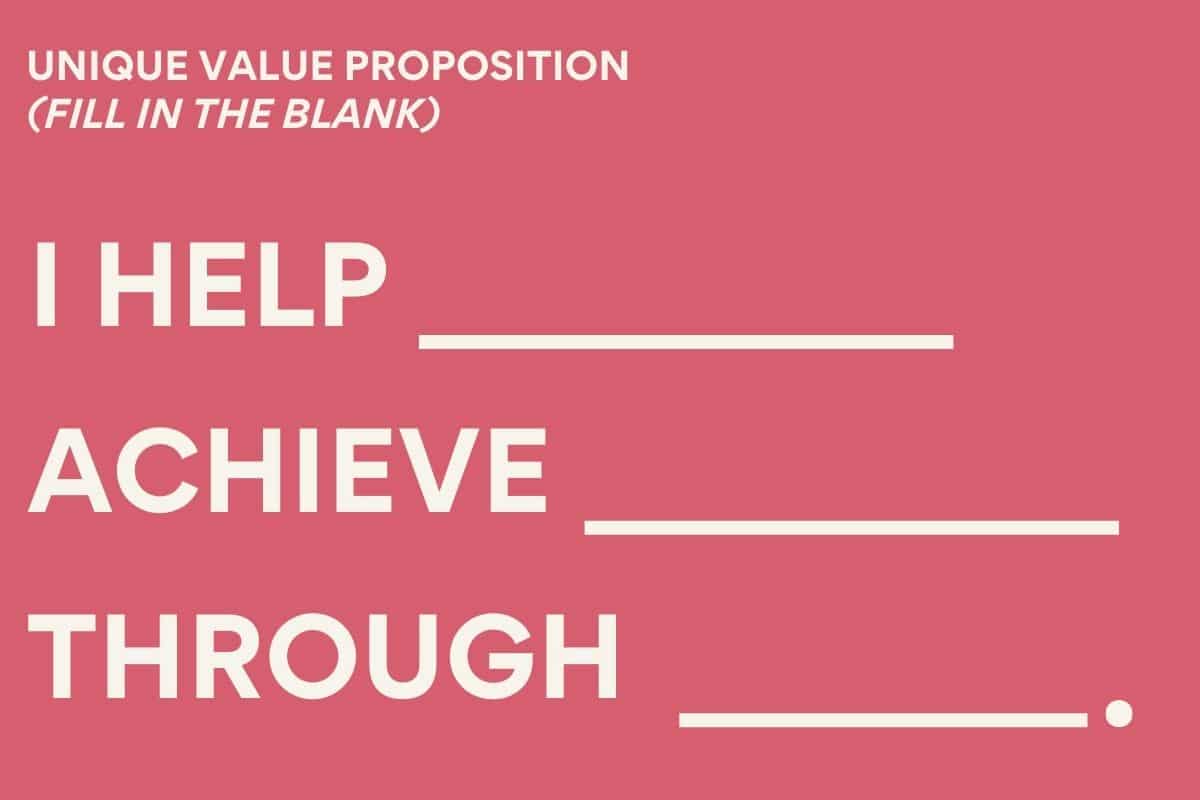
Examples:
- I help [specific audience] [solve a problem] through [your method or approach].
- I help [audience] get [desired result] without [common frustration].
- I teach [audience] how to [skill or outcome] using [your unique process].
- I support [audience] in [achieving goal] so they can [bigger benefit].
- I guide [audience] through [your service or expertise] to help them [result or transformation].
2. Ignoring Your Personal Story
Your story is one of the strongest tools you have, yet many people hide it.
They post tips but never talk about their journey. They share wins but never talk about the steps that got them there. They sound like everyone else.
Your story builds trust. It shows your values. It helps people understand why your work matters.
You don’t need a dramatic history. You just need to be real. Share what shaped you. Share what you care about. Share what you’re learning.
When people know you, they remember you.
Using Storytelling to Strengthen Your Brand
Your personal brand is a story. People connect with real narratives more than polished content.
- Tell your journey. Talk about your wins and your setbacks. These moments teach people who you are and how you think. Stories stick long after facts fade.
- Document your process, not just your results. Instead of trying to create perfect posts, show what you’re working on today. Bring people along as you test ideas, make decisions, or push through challenges. It feels natural and builds connection.
- Add your own take on topics in your field. Your perspective is what sets you apart. When something happens in your industry, say what you think and why.
- And don’t forget the emotional side. Facts inform, but emotion creates bonds. People remember how your story made them feel.
If you want to tie your story into your strategy, this guide on how to build your personal brand breaks down how to do it clearly.
3. Overdoing the Self-Promotion
Too many brands fall into the “all about me” trap. Every post feels like a pitch. Every message feels like a brag.
People tune out quickly.
A clear example: an influencer with 2.6 million followers launched a t-shirt line and couldn’t sell 36 shirts. Huge reach, almost no action.
Why? Her audience didn’t see value. They didn’t feel connected. This is the gap between visibility and vanity.
Instead of trying to impress people, help them. Give answers. Give ideas. Give examples.
A simple rule:
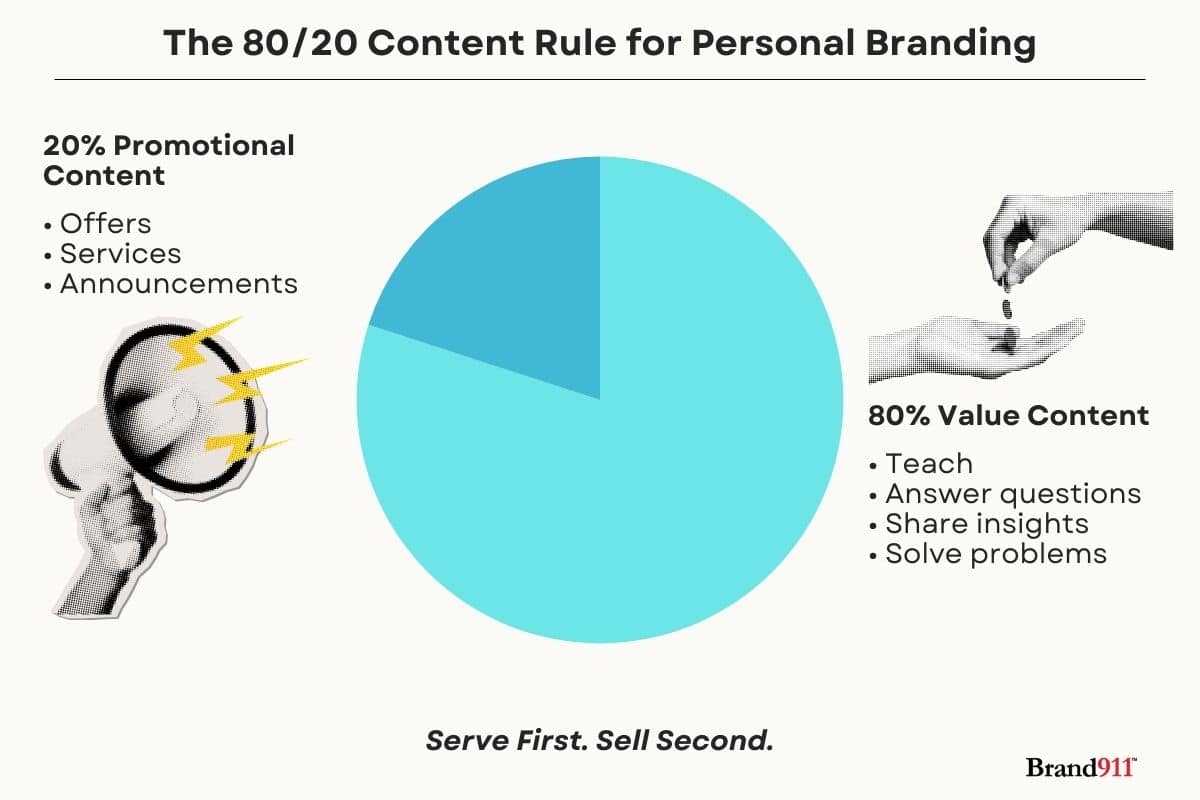
Spend most of your time offering value. Save the rest for self-promotion.
When people see you helping first, they trust you faster.
How to Shift From Selling to Serving
If you want a stronger brand, focus on helping your audience.
- Use the 80/20 rule. Keep 80% of your content useful and solution-focused. Use the remaining 20% for your offers or updates. This balance shows that you’re here to support, not just sell.
- Answer real questions. Look at what your audience struggles with and create content that helps them solve those problems. When you become a source of answers, trust builds naturally.
- Build a community, not a crowd. Ask questions. Start conversations. Respond to comments. People connect with people who pay attention to them.
When you lead with value, the right opportunities show up on their own.
If you want ideas for value-driven content, these self-branding ideas can help you brainstorm topics your audience actually cares about.
4. Showing Up Inconsistently
Inconsistency is one of the fastest ways to weaken a brand.
- You post three times one week and disappear the next.
- Your tone shifts depending on your mood.
- Your visuals change every few months.
Your audience doesn’t know what to expect.
Consistency builds trust. When you show up the same way across every platform, people learn to recognize you.
Pick a simple tone. Pick a color palette. Pick a posting rhythm you can actually maintain…then stick with it.
5. Leaving Authenticity Out of the Picture
Trying to sound like someone else is a shortcut to a bland brand.
You don’t need to copy the influencer in your space. You don’t need to follow every style trend. You don’t need to edit yourself into a version that doesn’t feel like you.
Authenticity cuts through noise.
Talk the way you talk. Share your real perspective. Show the behind-the-scenes parts of your work.
Your natural voice is the easiest one to sustain long term.
6. Renting Your Digital Real Estate
This is a personal branding mistake most people don’t notice until it’s too late.
They build everything on social platforms. Then the platform changes. Or their reach drops. Or their account gets flagged. Suddenly, they lose access to a big piece of their brand.
A personal website solves this.
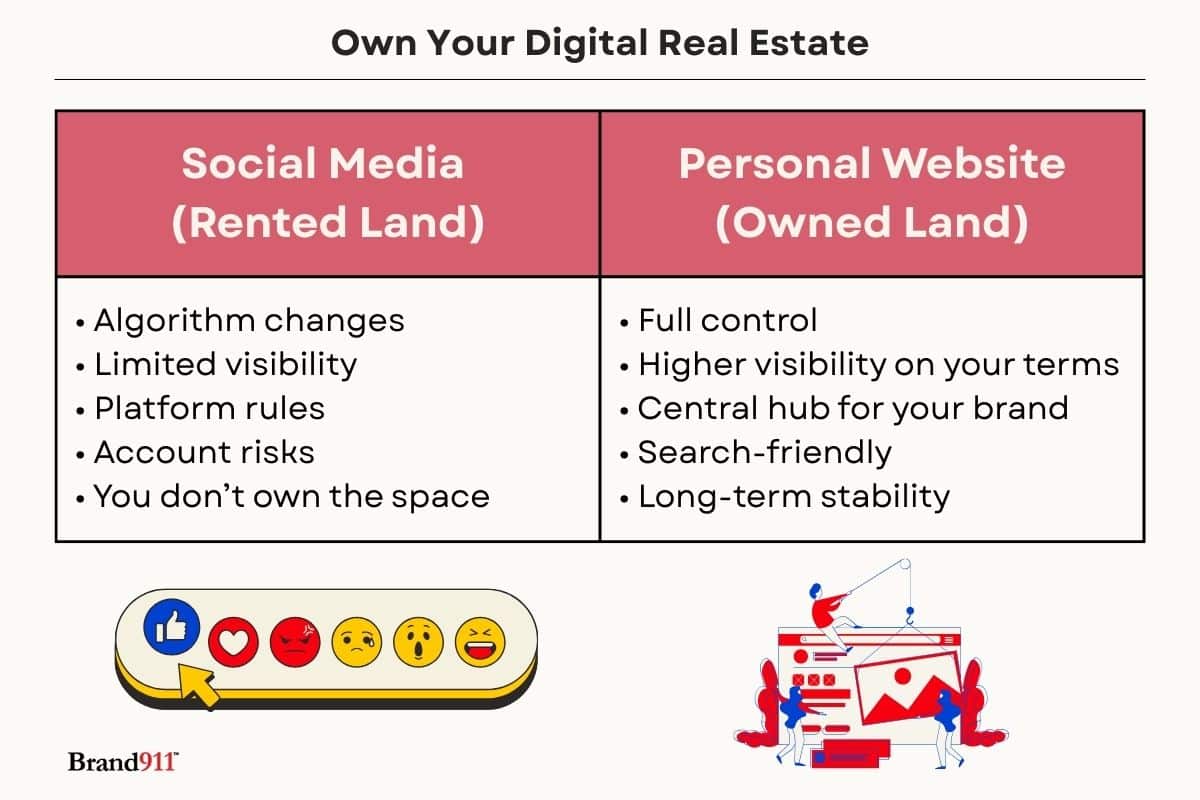
Your website is your home online. You control it. You set the rules. You own your content. You shape the narrative.
Social platforms help you grow, but your website protects your brand.
If you don’t have a site yet, our guide on how to create a personal website walks you through the basics.
The Benefits of a Personal Website
A personal website strengthens your brand in ways social media can’t.
- You control your story and your content. You’re not limited by character counts, algorithm shifts, or format rules. You get to present information the way you want
- Social media reach is unreliable. Only a small slice of your audience sees your posts—sometimes as little as 6%. A website bypasses that limitation
- Your site becomes your professional hub. It can hold your portfolio, your blog, testimonials, contact information, and anything else you want people to find quickly
- Search engines reward this. A well-optimized website can rank for your name and bring steady organic traffic that you don’t have to pay for.
Your website is more than a home base. It’s long-term brand insurance.
7. Broadcasting Instead of Engaging
Many people treat their platforms like loudspeakers. They post but don’t respond. They talk but don’t listen. They publish but don’t show interest in anyone else.
That’s not a brand. That’s a wall.
Strong brands are built on relationships. And relationships come from conversation.
Ask questions. Reply to comments. Jump into discussions. Celebrate other people’s work.
When you engage, people stay. When you ignore, they move on.
How to Build Real Connections
Real connection starts when you show up for actual conversations.
- Respond to comments and messages. Even a short reply shows you’re paying attention and that you value the people who follow you
- Ask questions and invite feedback. Give your audience room to share their own experiences and challenges. This turns one-way posts into two-way discussions and gives you insight into what they need
- Go beyond your own content. Comment on other people’s posts. Share their ideas with your take added. Join communities and groups where your audience spends time. Contribute in a way that adds value.
The more you participate, the faster your brand becomes someone people know—not just someone they scroll past.
If LinkedIn is a core part of your brand, these LinkedIn SEO tips can help more of the right people find you.
8. Ignoring Data and Feedback
You can’t fix what you don’t measure.
Too many people guess their way through content. They never check what performs well. They never adjust based on engagement. They never study which posts spark conversations.
Your data tells you what your audience wants.
Look at:
- Saves
- Shares
- Comments
- Time on page
- Click-through rates
Patterns show up quickly when you pay attention. Once you see what works, you can do more of it.
Data makes personal branding clearer. It saves time. It removes guesswork.
How to Learn From Your Data
Your analytics are direct feedback from your audience.
- Monitor engagement closely. Look at what gets saved, shared, or sparks long conversations. A post with 100 likes but zero comments might look good, but a post with 20 likes and thoughtful comments tells you far more
- Study your trends. Check your data weekly to see when your audience is active and which topics or formats land best
- Test different formats. Try short posts, long posts, videos, carousels, or quick tips. This helps you understand what your specific audience responds to
- Set clear metrics. Your goals decide what matters. For example, follower growth might mean nothing if your real goal is consulting leads or brand partnerships
- Adjust based on what you learn. If videos perform well, create more. If certain topics always spark questions, expand them. The cycle is simple: test, measure, adjust.
When you listen to your data, your brand grows with intention, not luck.
9. Attracting the Wrong Audience
Some people grow fast—then wonder why nothing converts.
Usually the problem isn’t reach. It’s alignment.
If your content attracts people who don’t connect with your message, you end up with followers who won’t hire you, won’t buy from you, and won’t help your growth.
Your content should pull in the right crowd, not the biggest one.
Be clear about who you want to reach. Let your content filter the rest.
If you’re not attracting the right people, it may be time for a complete rebrand.
10. Misunderstanding Your Target Audience
Personal branding mistakes often come from one simple issue: talking to the wrong people.
You may love the content you create, but if your audience doesn’t need it, they won’t respond.
Know their questions. Know their goals. Know their frustrations. Know their language.
Your brand becomes stronger when your content meets a real need.
11. Chasing Every Trend You See
Trends can be fun. But chasing all of them makes your brand feel scattered.
You don’t need to jump on every viral audio. You don’t need to follow every new posting format. You don’t need to copy every creator’s style shift.
Trends should support your brand—not rewrite it.
Join the ones that align with your message. Skip the ones that don’t.
12. Overcomplicating Your Brand
Too many content pillars.
Too many taglines.
Too many topics.
Too many messages competing for attention.
People remember simple brands. People trust clear brands. People follow brands they can explain in one sentence.
Strip your brand down to the essentials:
- One message
- One tone
- A few clear themes
Simple scales, but complex breaks.
13. Giving Too Much Power to Negative Opinions
One harsh comment can silence a creator for months.
Don’t let it.
Strong brands are built over time. You will get opinions. You will get feedback. Some helpful, some not.
The people who matter aren’t the loudest critics. They’re the ones who stay, engage, and grow with you. Focus on them.
14. Forgetting Your Brand Message
Your brand message is the anchor of your content. Without it, everything feels scattered.
When you forget your message, your content drifts. It becomes harder for people to understand what you stand for. It becomes harder for them to choose you over someone else.
Say your message often. Say it clearly. Say it in different formats so it sticks.
Repetition builds recognition.
15. Not Maintaining Your Online Presence
A neglected personal brand is easy to spot:
- Outdated bios
- Inactive profiles
- Old profile photos
- Broken links
- Pinned posts from years ago
These small details shape how people see you.
Your online presence needs basic care. Refresh your profiles. Update your website. Review your content. Stay active in the spaces where your audience spends time.
A maintained brand signals reliability. A neglected brand does the opposite.
If you haven’t been maintaining your online presence, do a personal brand audit to find the weak spots.
Conclusion: Build a Brand That Actually Feels Like You
Most personal branding mistakes come down to clarity, consistency, and honesty.
When you know your message, your audience, and your goals, everything aligns. When you engage, measure, and stay true to your story, the right people notice.
Your personal brand doesn’t need to be perfect. It just needs to be real, intentional, and maintained.
If you want support shaping a clear and recognizable brand, Brand911’s personal branding services can help you build a strong presence that grows with you.
About us and this blog
We are a digital marketing company with a focus on helping our customers achieve great results across several key areas.
Request a free quote
We offer professional SEO services that help websites increase their organic search score drastically in order to compete for the highest rankings even when it comes to highly competitive keywords.
Subscribe to our newsletter!
More from our blog
See all posts




Recent Posts
- What is an SEO Strategy? January 8, 2026
- What Is Digital PR? A Practical Guide to Building Trust Online January 6, 2026
- How to Do a Content Gap Analysis December 30, 2025


Recent Comments